Leadflow Collective builds websites, booking flows and local SEO for Winter Park, Colorado businesses. We are based in Fraser, a few minutes down US 40, so Winter Park is the town next door rather than a market on a map. We build custom sites designed to turn visitor searches and local searches into booked jobs, reservations and phone calls.
your competition includes a ski resort's marketing department
Winter Park is an unusual place to run a small business online, because the town shares its name with a destination resort that has a large marketing budget, a huge backlink profile, and a decade of head start in Google's index. When somebody types "Winter Park" into a search bar, an enormous share of that traffic goes to resort-owned pages, booking aggregators and travel content mills before it reaches a single local business.
That is not a reason to give up on search. It is a reason to be specific. A page trying to rank for "Winter Park" as a general term is competing with the entire tourism industry. A page built around "snowmobile tours in Winter Park," "Winter Park hot tub repair" or "private ski lessons Winter Park" is competing with a handful of real businesses, and those searches are the ones attached to people ready to pay.
Most of the work we do here is narrowing. Fewer vague pages, more pages that answer one specific thing extremely well. It is less satisfying than chasing the big keyword, and it books far more jobs.
two audiences, one homepage, no compromise
A Winter Park business almost always serves two people who need opposite things.
The visitor is short on time and long on options. They have never heard of you, they are comparing you against four other tabs, and they are probably on a phone with a weak signal in a condo. They need photos that make the decision easy, a price signal, availability, and a way to book without a phone call. They will not read three paragraphs about your history.
The local knows exactly who you are and is checking one thing: are you open, and can you get to them. They want hours, a phone number, and a service area. Everything else is noise.
Trying to serve both with a single generic homepage usually means serving neither. What works is a homepage that routes fast — an obvious path for booking and an obvious path for calling — with the depth living on pages underneath. That structure also happens to be what search engines want, because each page ends up about one clear thing.
designing around the season, not against it
Almost nothing in this town is a twelve-month business in the same shape. Winter brings skiers and the trades that support a full town. Summer brings mountain bikers on the Trestle trails, hikers, and a completely different lodging pattern. Shoulder season brings quiet, and it is when most owners finally have time to think about their website — usually about three weeks after they needed it.
We build for that rhythm rather than pretending it does not exist. Seasonal sections that swap without a rebuild. Booking availability that reflects what you are actually selling right now. Content published in the quiet months so it has time to be indexed and gain traction before the season it is meant to serve.
That last point matters more than people expect. A page about backcountry tours published in December is competing with pages that have been live since August. Search visibility is slow; the planning has to be earlier than the demand.
speed is a conversion feature here, not a vanity metric
Page speed gets talked about as an SEO checkbox. In a mountain town it is closer to a survival requirement, because a meaningful share of your visitors are loading your site on congested lodge wifi, on a single bar of cell service, or on a phone at fourteen percent battery in a parking lot.
Heavy sites built on page-builder plugins routinely ship two or three megabytes of JavaScript before showing anything useful. On a good connection that is invisible. On a bad one it is a blank screen, and a blank screen is indistinguishable from a business that is closed.
We hand-build rather than assemble, which keeps pages small by default. Images are sized and compressed for real devices. Content is in the HTML, so it renders even if a script fails. None of this is exotic; it is just the difference between building a site and installing one.
getting found by search engines and by ai assistants
Local SEO for a Winter Park business starts with the boring foundations: a Google Business Profile with the correct category, real seasonal hours, current photos, and a steady flow of reviews. Then a website with a genuine page for every service you sell, titles and descriptions that name the service and the town, internal links that connect them, and structured data describing the business in a form machines can read.
There is a newer layer on top of that now. People increasingly ask an assistant instead of a search engine — "what's the best sleigh ride in Winter Park," "who repairs snowblowers near Winter Park." ChatGPT, Gemini, Perplexity, Copilot and Google's AI Overviews build those answers by reading pages and extracting facts.
Getting mentioned in those answers is not a trick. It is stating things plainly: what the business is called, what it does, where it operates, what it costs in general terms, what makes it different, and the answers to the questions customers actually ask. Written in clean HTML, with headings that describe their sections, and structured data that agrees with the visible text. We cannot guarantee any assistant will recommend you — nobody can — but we can make sure that when one reads your site, it finds something accurate to say.
what happens after someone lands on the page
Rankings are a means. The end is a booking, a call or a filled-out quote request, and the gap between those two things is where most Winter Park websites quietly lose money.
The common failures are consistent. Booking buried three clicks deep. A phone number that is an image instead of a tappable link. No pricing signal at all, which filters out serious buyers along with the browsers. Forms that ask for a mailing address before someone has decided to hire you. No visible reviews. Photos that are clearly stock, in a town where everyone can tell.
We design the path deliberately: one primary action per page, a persistent way to book or call on mobile, short forms that go straight to the inbox or system you already use, and honest proof — your work, your photos, your reviews. It is not complicated. It is just usually skipped.
built for how winter park actually makes money
These are the kinds of businesses this work suits. It is a description of the craft, not a claim about who we have already worked with in this town.
Lodging & vacation rentals
Availability, photography and a booking path that does not hand your guest off to an aggregator that takes a cut.
Guides, tours & instruction
Trip pages built one per experience, with conditions, gear, difficulty and a reservation request that works on a phone.
Rental & retail shops
Inventory that flips from skis to bikes without rebuilding the site, plus reservations ahead of arrival.
Restaurants & après
Real HTML menus, accurate seasonal hours, and a page that loads before a cold, hungry group gives up.
Trades & property services
Emergency-ready layouts for the calls that come at the worst possible hour in the middle of a storm.
Wellness, spa & recovery
Service menus, practitioner bios and online booking for people whose legs hurt and whose patience is short.
websites
Hand-built sites that load fast on lodge wifi and make booking or calling the easiest thing on the page.
lead generation
Reservation requests, quote forms and follow-up wired into whatever system you already run your season on.
local seo
Specific service pages, a real Google Business Profile and the technical work to compete with the aggregators.
ai automations
Missed-call textback and instant replies for the hours you are on the hill instead of at a desk.
real sites for real businesses. every one from scratch.
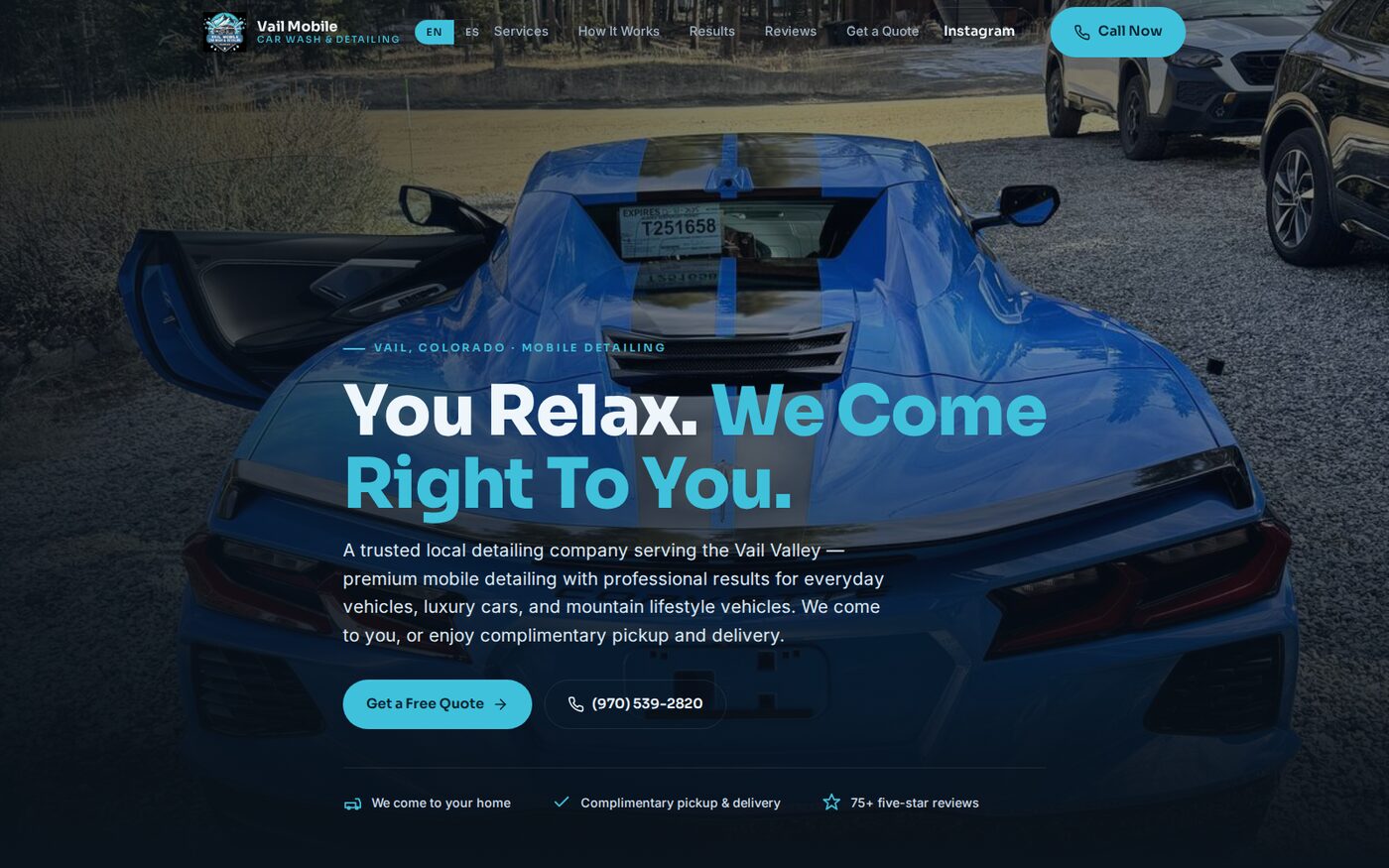
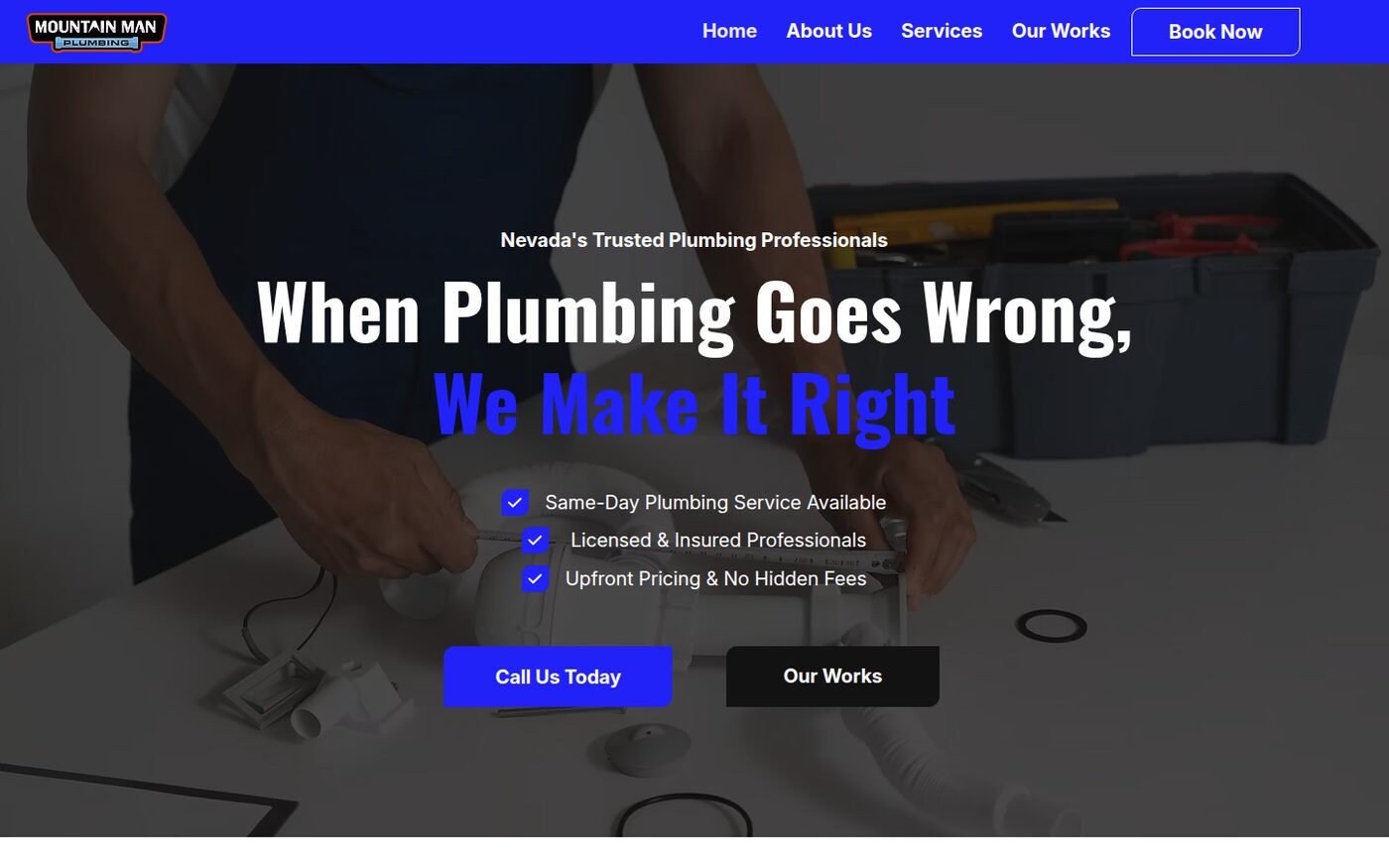
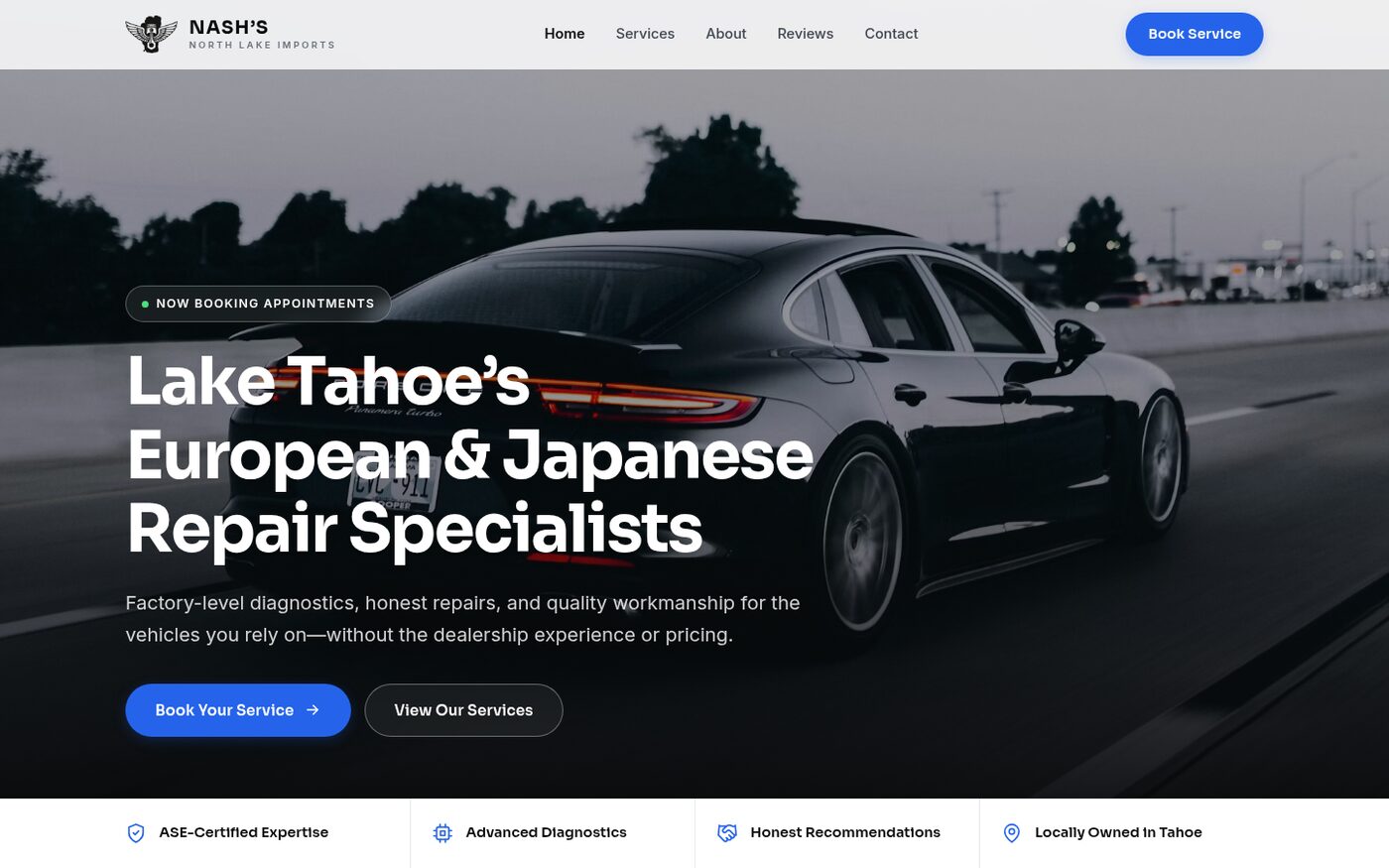
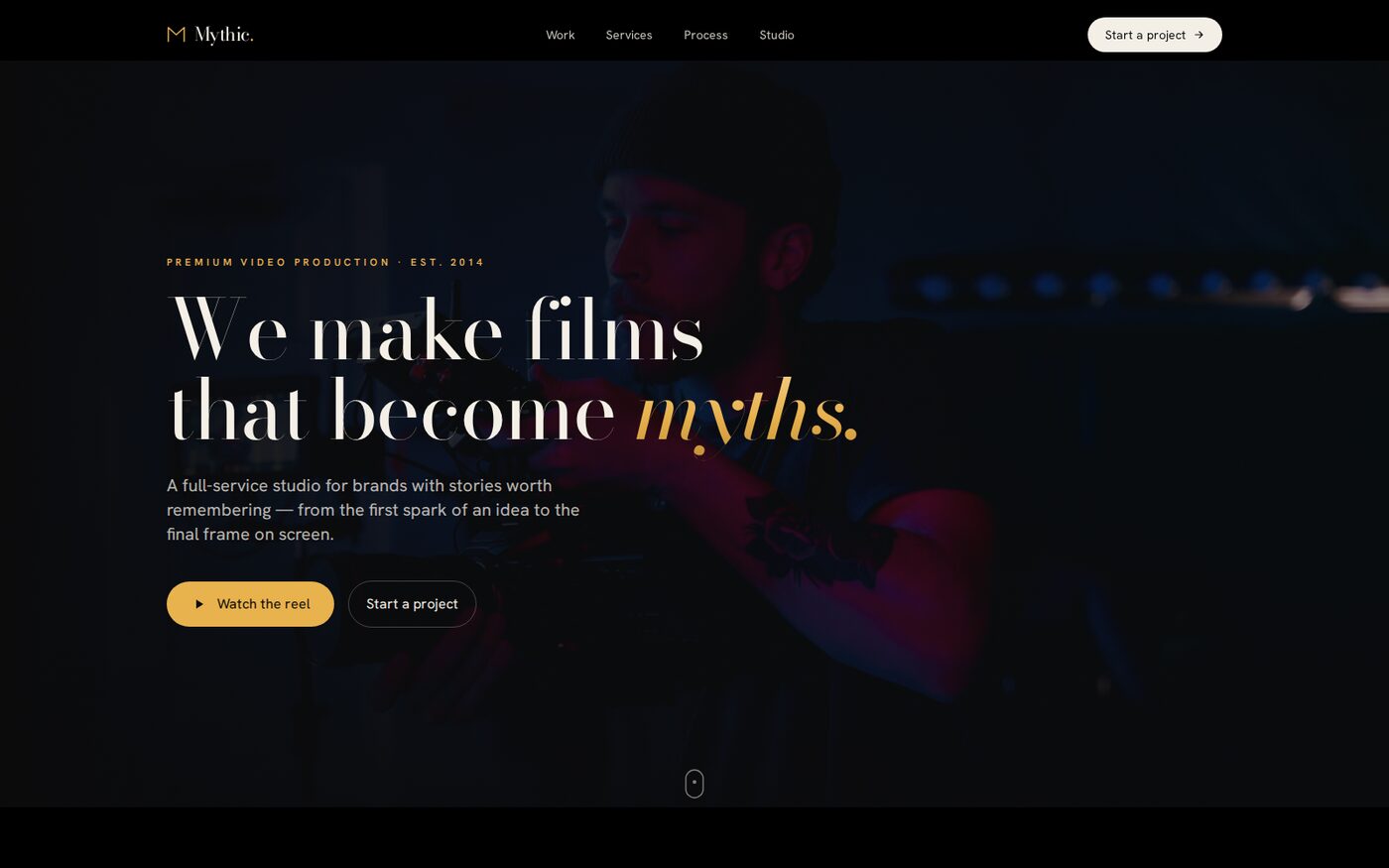
( real sites we've built — a sample, not the whole list )
questions winter park owners ask us first
Who builds websites for Winter Park, Colorado businesses?
Leadflow Collective. We are a web design and local SEO company based in Fraser, the next town down US 40, and we build custom websites for Winter Park businesses. Every site is built by one of the two founders.
Do you have an office in Winter Park?
No, and we will not pretend otherwise. Our address is in Fraser, a few minutes away. That is close enough to meet you at your shop, walk your property to shoot photos, or sit down over coffee — which is the part that actually matters.
Can you compete with the resort and the booking sites in search results?
Not for the broadest terms, and any agency that says otherwise is guessing. Big travel aggregators and resort-owned pages own the generic searches.
You win by being specific instead. Pages built around a single service, a single trip, a single neighborhood or a single problem face far less competition and attract people much closer to booking.
Can you connect the site to my existing booking system?
Usually, yes. Most reservation and scheduling platforms provide a way to embed or link to booking, and we would rather integrate what you already run your business on than force a migration during your busy season. If your current system is genuinely holding you back we will tell you, but that is your call to make.
My site is slow. Is that actually costing me money?
Almost certainly. Visitors here are frequently on weak connections, and a page that takes several seconds to show anything loses a meaningful share of them before they ever see your offer. Speed also feeds into how search engines evaluate pages. It is one of the few problems where the fix is measurable in both directions.
Should I use one site for winter and one for summer?
Almost never. Two sites split your search authority, double your maintenance, and confuse both customers and search engines. One site with well-built seasonal sections gets you the same flexibility without cutting your visibility in half.
How do I show up when someone asks ChatGPT for a recommendation?
By making the facts about your business easy to find and unambiguous: a plain description of what you do, the town you operate in, your services listed in a structured way, and clear answers to common questions. Assistants read pages and extract what is stated clearly. No one can promise a mention, but sites that state things plainly get quoted far more often than sites that do not.
How long does the build take?
A typical small business site takes a few weeks. Booking-heavy sites take longer because there are integrations to test. If you need to launch before a season starts, tell us the date early and we will tell you straight whether it is realistic.
Do you work with businesses in Fraser and Granby too?
Yes. The Fraser Valley is our home corridor and we build for Fraser, Tabernash, Granby, Grand Lake and the rest of Grand County, plus towns across Colorado.
the rest of the corridor
US 40 towns and the communities on either side of the divide.
Somewhere else in the state? The Colorado web design service area page lists every town we build for.